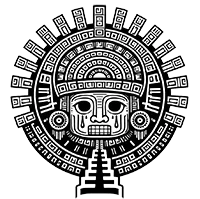

Kay Pacha - (KAY PAH-chah) - The Middle World
Finding Your Enneagram Type: How Recognition Works
You took the test. You read the description. It was almost right. Almost is not the same as right, and the gap between almost and right is where years get spent.
In This Article
What Is the Problem With Almost Finding Your Enneagram Type?
Most people who have taken an Enneagram test have a result that feels probably right - and that uncertainty is the problem the INTI NAN Kay Pacha (KAY PAH-chah) The Middle World system resolves. Type is not a behavior cluster. It is a motivation, and until the motivation is located, the type is not found.
This is where most people get stuck with enneagram discovery. Not at the beginning, where everything is new. After the beginning, when you know enough to know that the answer you have isn't quite right, but not enough to know why.
The tests are doing what tests do - sorting behavior into categories. But finding your enneagram type is not a sorting problem. It is a recognition problem. And recognition works differently than sorting.
The test gives you a hypothesis. Recognition is what confirms it - and recognition has a specific quality you will know when you find it.
What you are looking for is not the description that fits most of your behaviors. It is the description that explains why you do the things you have never been able to explain, even to yourself. That is a much narrower target, and it is the right one.
Why Does Enneagram Type Live at the Motivation Level?
The Enneagram maps core motivation in Kay Pacha - the Middle World of daily life and personality in the INTI NAN system. Two people can display identical behavior while running on completely different core fears, and the type is determined by the fear, not the behavior.
The motivational architecture of the Enneagram is extensively documented by the Enneagram Institute, whose research on Levels of Development demonstrates how the same core motivation produces radically different behavior depending on psychological integration.
The Enneagram identifies nine personality types - Types 1 through 9 - each governed by a core fear, a core desire, and a dominant motivational drive that shapes behavior before conscious choice. In the INTI NAN system, this motivation operates in Kay Pacha and forms the first of three coordinates producing a named pathway.
This is why self-typing from behavior alone produces mistyping at a rate that would embarrass any measurement tool. You are measuring the output, not the engine. The engine is what type describes.
What you consistently avoid reveals your core motivation more accurately than anything you pursue - because avoidance is where the protection lives.
Core motivation is not what you want. It is what you are organized around not losing, not feeling, not becoming. Type 6 is not organized around loyalty - it is organized around avoiding the feeling that the ground might give way. Type 3 is not organized around success - it is organized around the terror of being seen as worthless. The behavior follows from the fear, not from a personality preference.
When you find the fear that your type is organized around, and you recognize it as yours, something shifts. Not dramatically. It is less like revelation and more like a quiet click. That click is what you are looking for. Understanding Type Motivations: Why Behavior Never Tells the Full Story is the difference between a test result and an actual recognition.
How Does the INTI NAN Kay Pacha System Approach Finding Your Type?
In the INTI NAN system, Kay Pacha is the dimension where Enneagram motivation operates - the world of daily life, personality patterns, and the strategies people build around their core fear. Finding your type in Kay Pacha means locating the motivation beneath the pattern, not matching the pattern itself.
Type recognition works the same way in the INTI NAN framework. The Puma (POO-ma) The Mountain Lion's lens does not ask what you do. It witnesses how you move - what you protect, what you cannot leave alone, what you circle back to even when you told yourself you were done with it. Western psychological framing tends to ask: which description fits you best? The Puma asks something quieter: where do you tighten? What do you guard before you even know you are guarding it?
That distinction matters. Fitting a description is a cognitive act. You can fit a description through aspiration, through familiarity, through recognizing someone you know. But the tightening - the thing your body does before your mind has processed the situation - that is type operating at its root level. The Puma witnesses this without judgment, without the urgency to resolve it into a verdict. Type recognition in Kay Pacha is not an answer you arrive at. It is a settling into something that was already true.
The Puma does not confuse itself with other animals. It does not need external validation to know its own nature. Neither do you - once you are looking at the right level.
Kay Pacha is one of three dimensions in INTI NAN. Combined with Hanan Pacha (hah-NAHN PAH-chah) The Upper World, which maps Soul Type, and Ukhu Pacha (OO-koo PAH-chah) The Lower World, which maps the approach to inner recognition, every person sits at the intersection of all three - producing one of 189 named pathways™. For example: a Type 1 with a Scholar Soul has three sibling pathways depending on which Ukhu Pacha recognition completes the configuration. Each pathway is a distinct recognition, not a variation of the same one - the core type is the same, the texture of the lifetime is not.
Not sure the test result is right?
The Enneagram Test is a starting point. The Free Enneagram Test adds the dimensional context that confirms whether your core type is actually the one you're working with.
Take the Free Enneagram Test →How Does Recognition Actually Work When Finding Your Type?
The recognition moment for finding your Enneagram type has a specific quality that distinguishes it from ordinary identification. It tends to produce a slight discomfort rather than satisfaction - the feeling of being seen doing something you would rather not acknowledge in the INTI NAN Kay Pacha framework.
The discomfort is important. It is not the discomfort of a wrong answer - it is the discomfort of a right one. The description that fits the surface of your personality feels comfortable because it describes things you already know about yourself and are at peace with. The description that finds your type often lands on something you have tried to manage, minimize, or explain away.
The type that makes you slightly uncomfortable to claim is frequently closer to your actual type than the one you feel proud to be.
Stress behavior is one of the clearest diagnostic signals in enneagram discovery. Not how you behave when you are performing well - how you behave when things are genuinely falling apart. Under pressure, type becomes less filtered. The mechanisms that usually stay invisible become visible, to you and to people around you.
Here is what stress looks like across the types, and why it reveals more than behavior at rest:
The Avoidance Signal
Every type has a specific category of experience it works to avoid. Type 5 avoids depletion - conversations end when they feel drained, not when they have nothing to say. Type 2 avoids acknowledging need - they will reframe their own needs as caring for someone else before they will state them directly. What you reflexively move away from is more diagnostic than what you move toward.
The Stress Amplification
Type 7 under genuine stress does not become more optimistic - they become frantic, over-scheduled, and irritable when pinned down to a single task. Type 1 under stress does not become more flexible - they become more rigid and more critical, particularly of themselves. The behavior intensifies, not inverts. If the description of your type under stress sounds like a version of you that you recognize from your worst weeks, that is significant.
The Explanation That Unlocks History
The right type explains things that happened years ago in a way nothing else has. Not just current behavior - old decisions, old patterns you thought you had left behind. When you read the right type description and find yourself thinking about something from fifteen years ago and suddenly understanding it, that backward reach is one of the most reliable signals of correct self-typing.
It is also worth noting that Enneagram Mistyping: Why You Might Have Your Type Wrong is common precisely because the behaviors of adjacent types overlap significantly. Type 9 and Type 5 can look nearly identical from the outside - both quiet, both apparently undemanding. The difference is entirely internal: the 9 is managing peace, the 5 is managing depletion. The behavior is the same. The engine is not. And it is also worth knowing that The 27 Enneagram Subtypes: How Instinct Shapes Every Type can make your type look like a different one entirely, which is why subtype awareness matters in the self-typing process.
You are not looking for the type that describes your best self. You are looking for the type that describes the pattern running underneath both your best and your worst moments.
What Should You Watch for When Finding Your Enneagram Type?
The most practical adjustment in finding your Enneagram type in Kay Pacha is to stop answering from your ideal self. Test questions produce accurate results only when answered from the self that actually shows up under pressure - not the self you are working to become.
When a test asks "I am often concerned about what others think of me," most people answer from who they aspire to be, or who they have become after years of deliberate effort. The answer that reveals type is the one from the version of you that existed before you started working on it.
What Most People Watch
Behaviors they are aware of and have context for. Actions they can explain and defend. The parts of themselves they have already made peace with.
What Actually Reveals Type
The reaction that happens before you decide how to react. The thing you do when you are tired and no one is watching. What you sacrifice first when something has to give.
Watch yourself for one week - not with judgment, just with the same neutral attention you might give to noticing the weather. What do you avoid? What do you return to compulsively? What does your body do in the first three seconds before your mind takes over? That data is more reliable than any set of answers you have given a test.
The type that fits is the one that explains your automatic behavior - the response that was already happening before you chose it.
What Is the Belief That Keeps You Mistyped?
The belief most likely to keep you mistyped is the assumption that the correct Enneagram description will feel good. In the INTI NAN Kay Pacha system, the correct type description typically produces mild resistance - recognition of a pattern you know well but would not have chosen to lead with.
You gravitate toward Type 4 because you value depth and authenticity. You claim Type 8 because you respect strength. You test as Type 1 and resist it because you don't think of yourself as critical. All of these moves are the same move - reading the description as a character reference rather than as a map of what drives you regardless of whether you like it.
The Mistaken Belief
My type should describe who I am at my best - my values, my strengths, the person I have worked to become.
What Is Actually True
Your type describes the pattern that runs through your best and worst moments equally. It is not a character assessment. It is a structural description.
The other common misconception is that you should feel certain. Type recognition rarely arrives as certainty. It arrives as a specific discomfort followed by an explanation that reaches further back into your history than you expected. Certainty is what you feel about a type you have intellectually decided on. Recognition is what you feel about a type that has decided on you.
Where Do You Go After Finding Your Enneagram Type?
If the recognition has not landed yet, these INTI NAN resources are built specifically for the self-typing process in Kay Pacha - not to assign a type, but to help the motivation surface on its own.
Take the Test
The Free Enneagram Test surfaces your core type by focusing on motivation, not behavior.
Read the Full Framework
The Enneagram Discovery Guide covers all nine types, how to identify yours, and the growth paths available to each.
Explore Kay Pacha
Visit Kay Pacha for the full Kay Pacha framework and how type recognition operates within this world.
Go Deeper on Motivation
Read the parent article: Understanding Type Motivations: Why Behavior Never Tells the Full Story - the foundation that makes type recognition possible.
Want to go deeper?
What's inside The Enneagram Discovery Guide?
- What Does the Enneagram Actually Map?
- What Are the Nine Enneagram Types?
- How Do You Find Your Enneagram Type?
- Why Is Your Enneagram Type Only the Beginning?
- Why Does the Same Enneagram Type Look So Different Across Pathways?
- Your Next Steps
IF YOU WANT THE FULL PICTURE
Recognize Your Complete Pathway
Your Enneagram explains why you do what you do. The Karpay names all three - and life stops feeling like a fight you don't know how to win.
First 5 chapters free · Complete 11-chapter pathway for $49
Takes about 60 minutes.
Continue Exploring Free
The Enneagram framework in its modern psychological form was developed by Oscar Ichazo and Claudio Naranjo in the 1960s and 1970s and has been extensively documented by the Enneagram Institute. The INTI NAN system adapts the Enneagram as one of three dimensions that together map a person's full pathway.
The Soul Type framework is adapted from the Michael Teachings tradition, originally channeled by Chelsea Quinn Yarbro and developed across several decades of study. Within INTI NAN it represents the essence dimension of the pathway - what the person brought in rather than what they learned.
The three-world cosmological structure (Hanan Pacha, Kay Pacha, Ukhu Pacha) and the three healing pathways - Energy Healing (Kawsay Hampiy), Karmic Healing (Nawpa Hampiy), and Shamanic Healing (Paqo Hampiy) - are drawn from Andean Q'ero tradition, the indigenous Andean people widely regarded as the keepers of the original Inca spiritual tradition.
The framework is documented across anthropological and linguistic scholarship as a pre-Hispanic cosmological system rooted in the Quechua language. See also the Pacha (Inca mythology) article, which draws on colonial Quechua sources including the chronicles of Jesuit historian Jose de Acosta, and Constance Classen, Inca Cosmology and the Human Body (University of Utah Press, 1993).
Disclaimer: The INTI NAN pathway system is a framework for self-discovery and personal growth, not medical, therapeutic, or psychological advice, and not a religious teaching. Pathway descriptions and the Quechua and Andean concepts used throughout the platform are intended to support reflection and should be interpreted as invitations to explore, not definitive diagnoses, prescriptions, or representations of the full depth of living Andean tradition.