
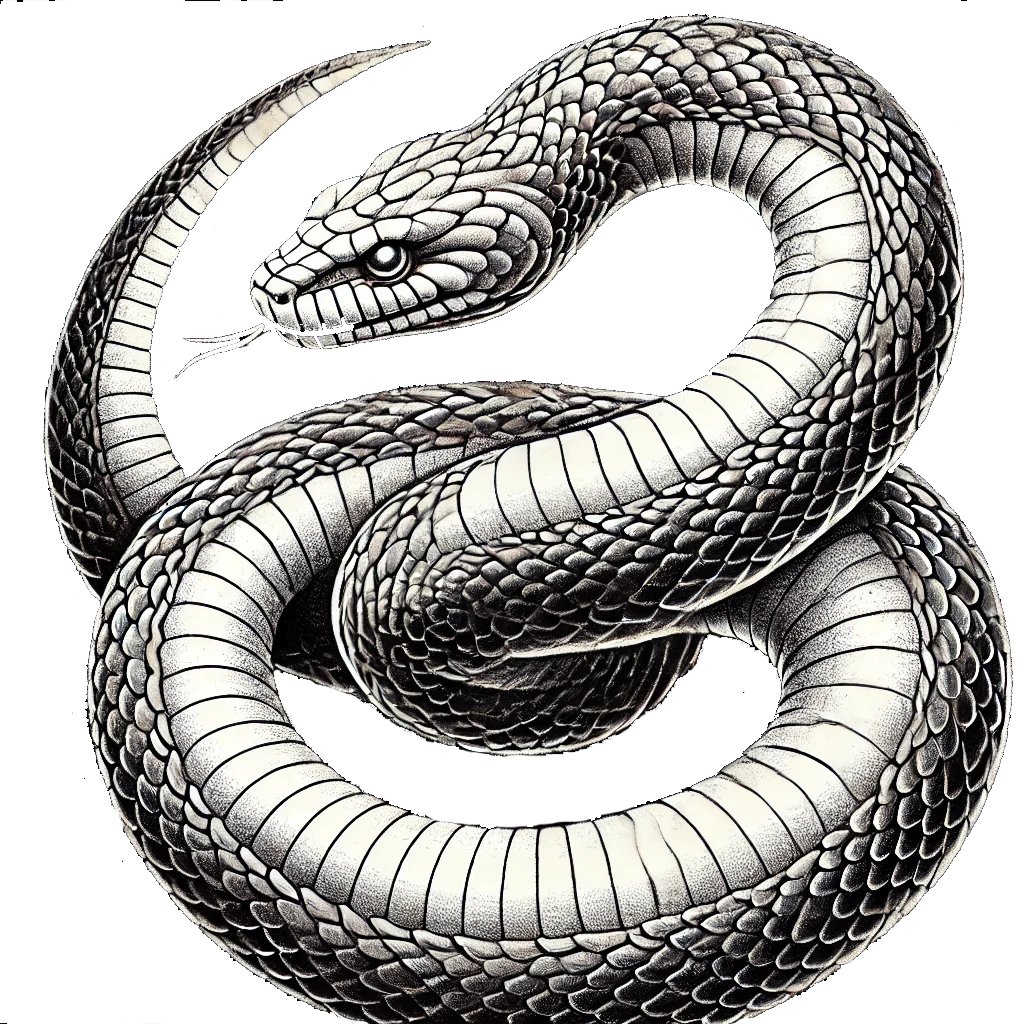
Ukhu Pacha - (OO-koo PAH-chah) - The Lower World
Shadow Work: Meeting the Parts You've Hidden
There is someone in your life who drives you unreasonably crazy - and the reaction is always bigger than the situation warrants.
In This Article
Why Does Shadow Work Start With the Person Who Infuriates You?
Shadow work begins in the gap between an event and the size of your reaction. In the INTI NAN Ukhu Pacha framework, the quality you cannot tolerate in someone else is almost always a quality you learned was not acceptable in you - buried, not eliminated, and now walking around in other people's bodies.
You are in a meeting. A colleague speaks with absolute certainty about something they only half understand. The confidence is staggering. You feel your jaw tighten. Later you describe it to a friend and notice you are still angry, hours after, in a way that seems - even to you - slightly out of proportion.
Shadow work begins right there. Not in the meeting. In that gap between the event and the size of your reaction. The quality you cannot tolerate in someone else - the arrogance, the neediness, the self-promotion, the carelessness - is almost always a quality you learned, very early, was not acceptable in you. You didn't eliminate it. You buried it. And now it walks around in other people's bodies, and every time you see it, something in you recognizes it without knowing why.
The qualities that make you unreasonably furious in others are often the qualities you have most thoroughly exiled in yourself.
This is not a metaphor. It is a precise description of how the rejected parts of the self operate. Jung called it the shadow self. The name is apt. What stands in light casts a shadow exactly its own shape.
What Does the Shadow Actually Contain?
The shadow is not a collection of your worst qualities. In the INTI NAN Ukhu Pacha framework, the shadow contains everything that got labeled unacceptable, including positive capacities - ambition called selfish, anger called dangerous, creativity called impractical. These gifts went underground too, alongside the difficult material.
The mechanism by which adaptive strategies outlive their usefulness - survival responses formed in childhood that persist as personality long after the conditions have changed - is documented extensively in the research of Gabor Maté, whose research on early attachment and adaptation describes precisely what the shadow holds and why it persists.
The shadow is not a moral failure. It is a survival strategy that outlived its usefulness. In the INTI NAN system, this recognition work happens in Ukhu Pacha and forms the Healing Pathway coordinate, one of three dimensions producing a named pathway.
The shadow forms the same way in everyone, through a series of ordinary messages. A child who cries too much learns to suppress sadness. A child who shows off and gets embarrassed learns to suppress pride. A teenager who expresses a political view and gets ridiculed learns to suppress that particular kind of confidence. None of these moments need to be dramatic. The accumulation is what matters.
Shadow integration is not about excavating darkness. It is about reclaiming the full range of what you are.
By adulthood, most people are operating with a carefully edited version of themselves - and have forgotten that the editing happened at all. The unconscious patterns that result feel like personality. They feel like just who you are. Shadow integration begins when you start to question that assumption.
How Does the INTI NAN Ukhu Pacha Framework Approach the Shadow?
In the INTI NAN Ukhu Pacha framework, the Serpent (ah-MAH-roo) The Serpent does not descend into depth reluctantly - it lives there. Ukhu Pacha holds what is beneath not as punishment but as the root system that feeds the visible plant. The shadow is not what is wrong with you; it is what has been underground long enough to forget it belongs to you.
The Andean frame held in Ukhu Pacha moves differently. The Serpent - guardian of the lower world - does not descend into the depths reluctantly. It lives there. It moves between surface and depth without fear, without the assumption that depth is inherently dangerous or that what lives below is less real than what lives above. Ukhu Pacha holds what is beneath not as punishment but as the root system that feeds the visible plant. The shadow, in this frame, is not what is wrong with you. It is what has been underground long enough to forget it belongs to you.
This distinction matters. The Serpent witnesses without judgment. It does not sort the underground into acceptable and unacceptable before returning it to the surface. It carries everything back. The rejected parts are not problems awaiting resolution. They are resources awaiting recognition.
The Serpent does not decide what is worth bringing to the surface. It carries everything back.
Ukhu Pacha is one of three dimensions in INTI NAN. Combined with the Enneagram world of Kay Pacha (KAY PAH-chah) The Middle World and the Soul Type world of Hanan Pacha (hah-NAHN PAH-chah) The Upper World, it produces one of 189 named pathways™. Each pathway names a specific recognition - a combination particular to how all three dimensions resolve in one person. Shadow work sits within the karmic dimension of this Lower World, returning to the surface what was sent underground for safekeeping. The Serpent does not sort the underground into acceptable and unacceptable before returning it. It carries everything back. The map is not complete until all three dimensions are visible. The Karpay is how you find which pathway is yours.
Want to see which karmic patterns are yours?
A short assessment. Your result names the karmic patterns most active in your life - the repeating dynamics whose source predates conscious memory and which keep returning until they are recognized.
Take the Free Karmic Healing Test →How Does Shadow Work Reveal Unconscious Patterns?
The shadow does not wait to be invited. In the INTI NAN Ukhu Pacha framework, it is already present in ordinary life through four signatures: projection, repetitive patterns, overcompensation, and sudden eruptions. The question is whether you recognize its form or continue to experience it as external events happening to you.
Projection
You assign to another person a quality that lives in you but is not consciously owned. The colleague whose arrogance infuriates you. The friend whose neediness exhausts you. The public figure whose self-promotion disgusts you. The reaction is information. Not about them - about what you cannot allow yourself to be.
Repetitive Patterns
You find yourself in the same situation across different relationships, different jobs, different cities. The details change. The structure does not. This is the shadow self arranging circumstances to recreate the original condition - not out of masochism, but because unrecognized material seeks recognition. The pattern is persistent precisely because it has not been seen.
Overcompensation
You work relentlessly hard to demonstrate that you are not what you secretly fear you are. The person most rigidly controlled is often carrying enormous rage in their shadow. The person most vocally selfless is often sitting on top of powerful ambition that was labeled unsafe. The intensity of the overcompensation maps the size of what is being managed underground.
Sudden Eruptions
The reaction that comes out of nowhere and seems foreign to you afterward. The comment that surprises even you as it leaves your mouth. The tears that arrive without an obvious cause. Suppressed material does not stay suppressed indefinitely. It finds gaps in the system - exhaustion, alcohol, stress, intimacy - and moves through them.
The shadow is not breaking through your defenses. It is reminding you that the defenses were never the point.
Understanding the jung shadow through these four signatures changes how you read your own daily life. The irritation is data. The pattern is a map. The eruption is a message from below the surface, delivered without translation. You do not need to force anything. You need to start reading what is already arriving.
This is why shadow integration does not require dramatic intervention. The material is already present in ordinary days. The work is learning to recognize its form. For more on how these patterns persist across time and relationships, the article on Breaking Karmic Cycles traces how they become self-reinforcing loops.
Where Do You Begin Shadow Work Without Destabilizing Yourself?
Shadow work does not require dismantling your life. In the INTI NAN Ukhu Pacha framework, three entry points are stable enough to begin with - tracking your strongest reactions for one week, noticing what you consistently judge in public figures, and naming the qualities that were explicitly or implicitly labeled unacceptable in your early environment.
Track your strongest reactions for one week. Not the mild annoyances - the disproportionate ones. Write down the quality in the other person that provoked the reaction. Not what they did. What quality in them you found intolerable. That list is your first map of your shadow self.
Notice what you consistently judge in public figures, strangers, or people you barely know. Strong moral disapproval directed at people who have no real impact on your life is often projection. The intensity of the disapproval is worth examining.
Ask what qualities you were explicitly or implicitly told were unacceptable in your family or early environment. Those qualities did not disappear. They went underground. Naming them is not the same as acting on them. Naming them is how you begin to choose.
You do not have to become what you buried. You have to remember that it belongs to you.
Not all shadow material announces itself through reactions to other people. Projection is the most visible doorway, but it is not the only one - and for some readers, it is not the primary one. Shadow material that lives without a projective expression shows up in different signatures: chronic shame that does not respond to ordinary reframing, self-sabotage that activates whenever something is about to work, dissociation under specific kinds of pressure, a persistent gap between who you appear to be in public and who you are when no one is watching. These are non-projective shadow expressions. The work begins differently with them - tracking the inner state rather than the outer reaction. The same principle applies: the material is buried because it was not safe to show, and recognition is what begins to make safety available now.
The question of whether shadow work can destabilize you is worth taking seriously. The honest answer is that it can, under specific conditions: when material is engaged faster than the system can integrate, when the engagement happens without a stable enough present-life container, when there is no support for what surfaces, when underlying conditions (acute crisis, untreated dissociation, active substance dependence) make integration impossible. Shadow work is not inherently dangerous, but doing it carelessly can be. The three entry points above are stable for most readers. If those three already feel destabilizing - if simply noticing your reactions produces a reaction larger than you can hold - the right next step is not more shadow work alone. It is engaging this material with qualified support. The Serpent moves through dark territory without losing its center, and the work is to develop that capacity, not to test it past what is sustainable.
What Have You Probably Believed About Your Shadow?
Most people approaching shadow work carry one of two beliefs. In the INTI NAN Ukhu Pacha framework, both are wrong - the shadow is not purely dark, and shadow work is not self-criticism. Recognition is not judgment. It is simply seeing what has been there all along, gifts included.
Common Belief
The shadow is the worst of me - the parts I need to keep contained.
What Is Actually True
The shadow is everything that got labeled unacceptable - including positive capacities that had no safe place to exist. Examining it does not release a monster. It returns range to a self that learned to operate in a narrower band than it actually has.
The second belief is that shadow work is about self-criticism - catching yourself being bad and correcting it. This is looking at the wrong level entirely. The shadow is not a moral failure. It is a survival strategy that outlived its usefulness. Recognition is not judgment. It is simply seeing what has been there all along.
Where Do You Go From Here With Shadow Work?
If the patterns described here feel familiar, these INTI NAN resources offer structured ways to explore further. Each addresses a different dimension of what lives beneath the surface in Ukhu Pacha - the tests, the guides, and the wider framework that holds shadow integration within the three-world system.
Take the Test
The Free Karmic Healing Test reveals the repeating patterns and cycles that persist across relationships and situations. It is a direct way to see which unconscious patterns are most active in your current life.
Read the Guide
The Karmic Healing Guide explains how karmic patterns become visible through recognition, and how that recognition releases their grip. It provides the wider context for what shadow exploration surfaces.
Explore the World
The Ukhu Pacha world page holds the full Ukhu Pacha framework, including how the lower world relates to the other two dimensions of the INTI NAN system.
The Wider Pattern
The Breaking Karmic Cycles article traces how the patterns the shadow creates become self-reinforcing over time, and what it looks like when the cycle becomes visible enough to interrupt.
Weekly · Free
One pathway. Every week.
A character you may recognize - perhaps even yourself - in a situation from ordinary life making a choice. The pattern that explains why - across all three dimensions. You'll see your friend. Or your father. Or the version of yourself you don't always notice.
No spam. Unsubscribe any time.
IF YOU WANT THE FULL PICTURE
Recognize Your Complete Pathway
Your Healing Path shows you how you change. The Karpay maps all three - and life stops feeling like a fight you don't know how to win.
First 5 chapters free · Complete 11-chapter pathway for $49
Takes about 60 minutes.
The Enneagram framework in its modern psychological form was developed by Oscar Ichazo and Claudio Naranjo in the 1960s and 1970s and has been extensively documented by the Enneagram Institute. The INTI NAN system adapts the Enneagram as one of three dimensions that together map a person's full pathway.
The Soul Type framework is adapted from the Michael Teachings tradition, originally channeled by Chelsea Quinn Yarbro and developed across several decades of study. Within INTI NAN it represents the essence dimension of the pathway - what the person brought in rather than what they learned.
The three-world cosmological structure (Hanan Pacha, Kay Pacha, Ukhu Pacha) and the three healing pathways - Energy Healing (Kawsay Hampiy), Karmic Healing (Nawpa Hampiy), and Shamanic Healing (Paqo Hampiy) - are drawn from Andean Q'ero tradition, the indigenous Andean people widely regarded as the keepers of the original Inca spiritual tradition.
The framework is documented across anthropological and linguistic scholarship as a pre-Hispanic cosmological system rooted in the Quechua language. For further reading see the Pacha (Inca mythology) article, which draws on colonial Quechua sources including the chronicles of Jesuit historian Jose de Acosta, and Constance Classen, Inca Cosmology and the Human Body (University of Utah Press, 1993).