Ukhu Pacha · (OOK-hoo PAH-chah) · The Lower World
Shamanic Healing Guide
You reorganise your thinking by going outside. You know which walk to take, which route changes what is stuck. Ritual is not optional for you – it just works.
Understand the five practices of Shamanic healing – Soul Retrieval, Power Animal Work, Journey Work, Plant Medicine, and Ancestral Ceremony – and where yours fits in your specific pathway through the three worlds.
Key Questions
What is Shamanic Healing?
Shamanic Healing is one of three growth paths in the INTI NAN Ukhu Pacha (OOK-hoo PAH-chah) The Lower World system. It describes people who transform through environment – whose answers come from a walk in the woods rather than a notebook, who change in the room with the right person rather than alone with their thoughts. Within Shamanic Healing there are five distinct types – Soul Retrieval, Power Animal Work, Journey Work, Plant Medicine, and Ancestral and Ceremonial Healing – each describing a different way the person makes contact with what is beyond their immediate field.
How is Shamanic Healing different from Energy and Karmic Healing?
The three healing pathways identify three distinct ways of transforming. Shamanic Healing identifies people who transform through environment – the walk that solves the problem, the room that changes the conversation. Energy Healing identifies people whose body knows before the mind catches up. Karmic Healing identifies people who transform through pattern recognition – seeing the cycles that repeat. All three sit within Ukhu Pacha, the Lower World of healing.
How do you identify your Shamanic Healing type?
Shamanic Healing type identification in the INTI NAN Ukhu Pacha system focuses on which mode of contact runs strongest in you – not what sounds appealing. The recognition pattern is more reliable than a description: a Soul Retrieval type senses what has been left behind in places or relationships. A Power Animal type tracks animals that arrive with significance. A Journey type finds insight in movement and travel. A Plant Medicine type experiences certain plants and substances as contact with intelligence. An Ancestral type feels the pull toward ritual and marked space. The Free Shamanic Healing Test surfaces your type through recognition rather than preference.
What is the relationship between Shamanic Healing and the INTI NAN pathway system?
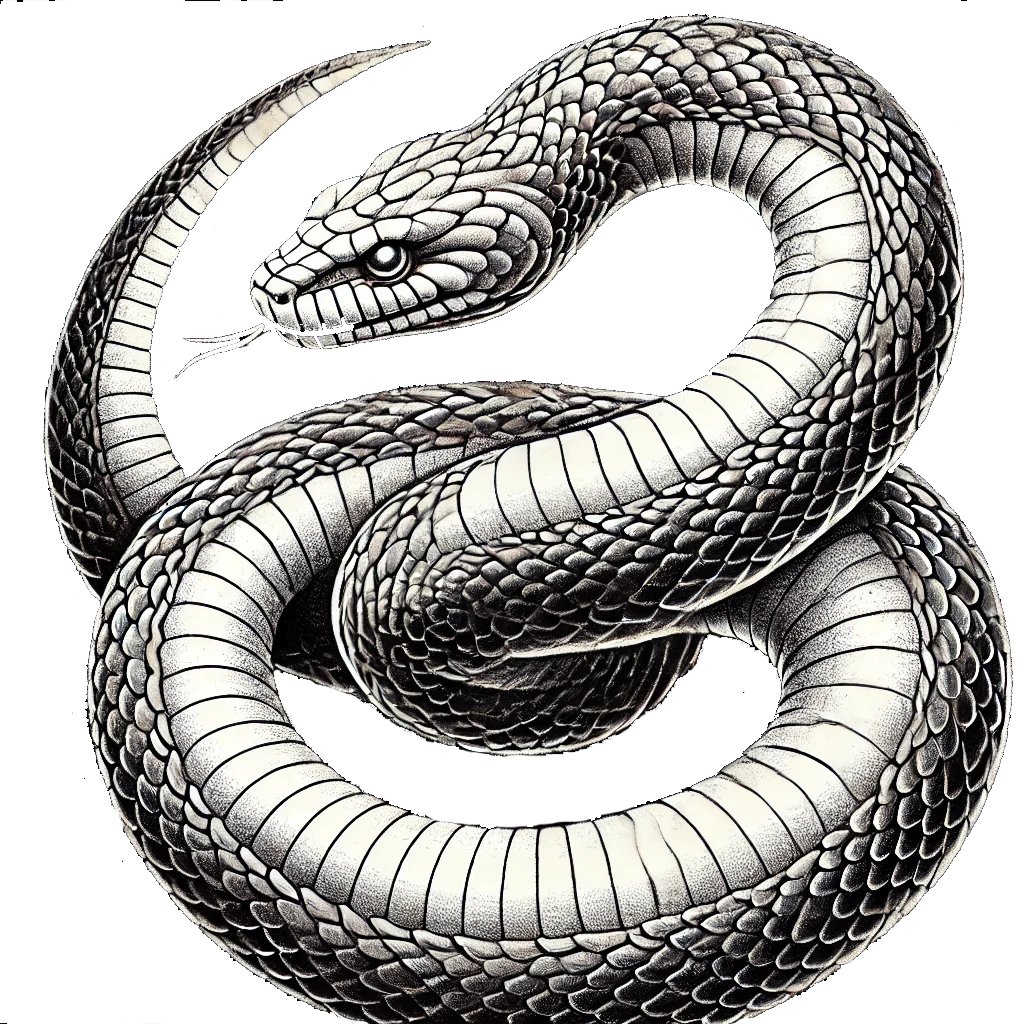
Shamanic Healing is the Ukhu Pacha coordinate in the INTI NAN three-world system. The Amaru (ah-MAH-roo) The Serpent, guardian of Ukhu Pacha, moves between visible and hidden worlds – tracking how transformation actually happens through contact with environment, place, and ceremony. Combined with your Enneagram type in Kay Pacha and your Soul Type in Hanan Pacha (hah-NAHN PAH-chah) The Upper World, your Shamanic Healing type produces one of 189 named pathways™. The Karpay (kar-PIE) Sacred initiation maps all three dimensions and reveals which specific pathway is yours.
In This Guide
- What Does Shamanic Healing Actually Mean in the INTI NAN Ukhu Pacha System?
- How Do You Recognize Shamanic Healing in Yourself?
- The Five Practices
- How Does Shamanic Healing Show Up in Daily Life?
- What Is the Shadow Side of Shamanic Healing?
- How Does Shamanic Healing Connect to Enneagram and Soul Type?
- Your Next Steps
What Does Shamanic Healing Actually Mean in the INTI NAN Ukhu Pacha System?
Shamanic healing, known in Quechua as Paqo Hampiy, is not a single practice or belief system. It is a family of approaches with a shared foundation: that transformation happens through environment, rhythm, ritual, and relationship with the living world – visible and invisible.
In the INTI NAN system, Shamanic healing is one of three expressions of Ukhu Pacha – the lower world, the serpent’s territory. It is the specific pathway through that world for people whose deepest shifts happen not through intellectual understanding or somatic release alone, but through a change in context. A different place. A ceremony. A plant ally. A power animal. A recovered soul part.
What distinguishes Shamanic healing from Energy or Karmic healing is the mechanism. Energy healing works through the subtle body – sensation, flow, physical intelligence. Karmic healing works through pattern recognition – seeing what repeats across time. Shamanic healing works through the environment, the spirit world, and the web of relationships between the visible and invisible.
The Five Practices Within Shamanic Healing
Soul Retrieval recovers what fragmentation left behind. Power Animal Work operates through non-human intelligence and instinct. Journey Work accesses non-ordinary reality deliberately. Plant Medicine works with the intelligence of sacred plant allies. Ancestral and Ceremonial Healing completes inherited lineage patterns. These are not five separate types – they are five expressions of one way of moving through the world.
The free test identifies which of these five practices is most active in you right now. The Karpay places the entire Shamanic dimension within your complete three-dimensional pathway – the specific convergence of your Enneagram type, Soul Type, and healing dimension that makes your pathway one of 189.
How Do You Recognize Shamanic Healing in Yourself?
Before identifying which of the five practices is yours, the more fundamental question is whether Shamanic healing is your Ukhu Pacha dimension at all. Here is what it looks like in ordinary daily life – before anyone assigns it a name.
- You walk into a forest and your shoulders drop before you have gone fifty yards. You reorganise your thinking by going outside, not by making lists.
- When someone you love is struggling, your instinct is not advice. It is “let’s go for a walk.” You know that movement through space changes what is stuck inside.
- Ritual matters to you even if you would never use that word. The way you make coffee, the route you always drive, the thing you do before a big meeting that nobody knows about. These are not habits. They are containers.
- Certain places feel wrong immediately – before you have any information about them. Others feel like arriving. You have always navigated by this and quietly stopped trying to explain it.
- You restore by changing your environment, not by talking it through. The problem that had no solution becomes solvable on a long walk, in a different room, outside under a particular sky.
- You have a relationship with specific animals that goes beyond preference. Certain ones appear at meaningful moments. You have never quite believed it was coincidence.
- Altered states come more naturally to you than to most people – deep meditation, vivid dreaming, moments when ordinary reality goes thin and something else is accessible.
- You sense what a plant or a place is doing before you have rational information about it. Not as a belief. As direct perception.
If several of these land as recognition rather than description, you are likely Shamanic in your Ukhu Pacha dimension. The test identifies which of the five practices is your primary expression.
What Are the Five Shamanic Healing Practices?
These five practices share the same territory – the invisible architecture beneath ordinary experience – but they operate through different mechanisms. The test identifies which is most active in you.
Practice 01
Soul Retrieval
Soul Retrieval addresses the fragmentation that happens under sustained pressure, loss, or violation. Parts of self – qualities, capacities, ways of being – split off and remain behind at the moment of impact. For people with this primary expression, the sense of incompleteness is not metaphor. There is a persistent felt absence: something that used to be present and is not now, something that belongs to them and has not come back. The work is the deliberate recovery of those parts. Recognition does not come through insight alone – it comes through something that functions more like retrieval. Named paths in this expression include The Soul Midwife, The Between Worlds Walker, and The Obsidian Mirror.
Practice 02
Power Animal Work
Power Animal Work operates through non-human intelligence – the primal, instinctual knowing that predates language and analysis. People with this primary expression have always been drawn to specific animals in ways that exceed preference or aesthetic interest. Certain animals appear at turning points. Instinct arrives faster and more reliably than reasoning. The natural world is not background – it is a communication system they have always been reading. The power animal is a living relationship with a quality of intelligence – protection, vision, strength, cunning – that supports the person who carries it. Power Animal types walk paths including The Wolf Guardian, The Mother Bear, and The Warrior Healer.
Practice 03
Journey Work
Journey Work is the deliberate movement between ordinary and non-ordinary reality – accessing states beyond everyday consciousness to receive information, direction, and restoration. People with this primary expression live with one foot in the visible world and one foot somewhere else. Dreams are a working space, not background noise. Visions and synchronicities arrive with a reliability that is difficult to explain but impossible to ignore. Altered states come naturally. The shamanic journey is the formal practice of what these people do instinctively. Journey types include The Dream Painter, The Realm Hopper, and The Hermit Shaman.
Practice 04
Plant Medicine
Plant Medicine work operates through the intelligence of sacred plant allies – the living wisdom encoded in plants that have been used for healing and revelation across thousands of years of Andean, Amazonian, and indigenous traditions worldwide. People with this primary expression have an unusual relationship with the plant world that goes beyond botanical interest. Certain plants communicate directly – not as metaphor but as felt transmission. Their deepest transformations are often marked by a plant encounter: ayahuasca, huachuma, tobacco, coca leaf, or other sacred plant teachers. The Andean shamanic tradition at the root of the INTI NAN system is grounded in plant medicine as primary healing technology. Named paths include The Medicine Bringer, The Wisdom Paqo, and The Heart Paqo.
Practice 05
Ancestral and Ceremonial Healing
Ancestral and Ceremonial Healing works with the patterns that move through lineages – the fears, hurts, gifts, and unfinished business of the people who came before. People with this primary expression feel their ancestors as present rather than historical. They sense the weight of what was handed to them before they were old enough to refuse it. Ceremony is their mechanism – not performance, but intentional, structured acts that create conditions for something to shift across the line between the living and the dead. Ancestral types walk paths including The Ceremonial Heart, The Altar Keeper, and The Bone Reader.
How Does Shamanic Healing Show Up in Daily Life?
Each of the five practices has a different signature in everyday experience. These are patterns that appear before anyone assigns them a name.
Soul Retrieval shows up as a persistent sense of operating below capacity – not from lack of skill or opportunity, but from a felt absence that accumulated and did not resolve with time. People with this expression remember which events changed them. They carry a quiet inventory of moments when something left. They often describe feeling most like themselves in rare circumstances – deep rest, certain relationships, unexpected encounters – and the contrast between those moments and ordinary life is what drives the work.
Power Animal Work shows up as a lifelong relationship with the natural world that exceeds ordinary appreciation. Specific animals appear repeatedly – in dreams, in the physical world, at meaningful moments – and the person notices. Their best decisions come fast, from instinct, before analysis has a chance to complicate things. They are often more comfortable with animals than with many human social contexts.
Journey Work in Ordinary Life
People with a strong Journey Work orientation often describe a lifelong sense of living in two realities at once. The visible world is real – but it is not the only layer. Dreams carry information they act on. Synchronicities cluster around decisions in ways they have stopped trying to explain. They can enter altered states more easily than most people – through meditation, rhythm, movement, or simply sustained attention. This is not dissociation. It is a different relationship with the boundaries of ordinary consciousness.
Plant Medicine shows up as an unusual sensitivity to what plants are doing – the herb that pulled them in a particular direction, the garden that calmed something nothing else reached, the ceremonial plant experience that reorganised what had been stuck for years. In the Andean tradition from which INTI NAN draws, this is not metaphor – it is the actual mechanism of one of the oldest healing technologies on earth.
Ancestral and Ceremonial Healing shows up as a heightened sensitivity to family patterns – the ones that repeat across generations with no apparent reason, the emotional inheritance nobody chose, the weight of what was unresolved before you arrived. These people have a natural relationship with ritual – intentional acts that mark transitions and create space for something to shift.
What Is the Shadow Side of Shamanic Healing?
Each of the five practices has a specific shadow – the place where its particular strength turns against itself.
Soul Retrieval’s shadow is the search becoming an identity. The incompleteness becomes the reason not to begin – not to commit, not to build, not to be fully present – because those parts are still out there waiting to return. The shadow is using the genuine reality of fragmentation as an ongoing explanation for not arriving.
Power Animal Work’s shadow is instinct becoming isolation. The contempt for analysis and institutional life that sometimes accompanies this expression can become a wall. Not every structure is a cage. When the power of non-human intelligence hardens into rejection of human complexity, the person loses access to the relational world that also requires them.
Journey Work’s shadow is non-ordinary reality becoming a permanent alternative to ordinary engagement. The person with strong Journey Work capacity can access other layers of reality with relative ease – and those layers are often more interesting and less painful than everyday life. The shadow is spending more and more time in those states while ordinary relationships and responsibilities go unattended.
Plant Medicine’s Shadow
Plant Medicine’s shadow is ceremony replacing integration. The plant opens something real – a door, a recognition, a reorganisation of what had been fixed. But the opening is not the work. The work is living differently afterward. When ceremony becomes the primary relationship and ordinary life remains unchanged, the medicine is being used as experience rather than as transformation. The plant allies did not open the door so you could stand in the doorway. They opened it so you could walk through.
Ancestral and Ceremonial Healing’s shadow is the lineage becoming a burden that justifies not moving. The ceremony that was meant to create completion gets repeated endlessly because completion keeps not quite arriving. The lineage work was meant to free the person to live forward. When it becomes the organizing principle of a life, it has reversed its own intention.
How Does Shamanic Healing Connect to Enneagram and Soul Type?
Ukhu Pacha – the lower world, where the serpent moves – is the world of what moves beneath the surface. In the INTI NAN framework, it is the territory of transformation: the patterns that run beneath conscious experience, and the mechanisms through which they change.
Shamanic is one of three expressions of Ukhu Pacha. Understanding the distinction matters – not to rank them but to locate yourself accurately.
Your healing dimension is one-third of your pathway. The other two dimensions – your Enneagram type (Kay Pacha) and your Soul Type (Hanan Pacha) – determine how the Shamanic dimension expresses specifically in your life. A Type 2 Server Soul with Shamanic healing walks a different path than a Type 5 Scholar Soul with Shamanic healing, even though both share the same healing mechanism.
That specific convergence – the three-way intersection that is yours – is what the Karpay names.
Your Next Steps
If this guide has described something you recognize – in the recognition patterns or in any of the five practices – the test will identify which expression is most active in you. Nine questions. No spiritual belief required.
If you have already taken the test, the Karpay maps all three of your dimensions – your Shamanic healing practice, your Enneagram type, and your Soul Type – into the specific pathway that is yours. One of 189 named convergences. The one that is already yours to walk.
Weekly · Free
One pathway. Every week.
A character you may recognize – perhaps even yourself – in a situation from ordinary life making a choice. The pattern that explains why – across all three dimensions. You’ll see your friend. Or your father. Or the version of yourself you don’t always notice.
No spam. Unsubscribe any time.
IF YOU WANT THE FULL PICTURE
Recognize Your Complete Pathway
The Shamanic Healing Guide explores one of three dimensions. The Karpay maps all three: Enneagram, Soul Type, and Healing. It reveals the one named pathway among 189 you’re already walking. 60 minutes.
First 5 chapters free · Complete 11-chapter pathway for $49.
Continue Exploring Free
Three tests, three worlds. Each one narrows down which of the 189 pathways is yours.
The Enneagram framework in its modern psychological form was developed by Oscar Ichazo and Claudio Naranjo in the 1960s and 1970s and has been extensively documented by the Enneagram Institute. The INTI NAN system adapts the Enneagram as one of three dimensions that together map a person’s full pathway.
The Soul Type framework is adapted from the Michael Teachings tradition, originally channeled by Chelsea Quinn Yarbro and developed across several decades of study. Within INTI NAN it represents the essence dimension of the pathway – what the person brought in rather than what they learned.
The three-world cosmological structure (Hanan Pacha, Kay Pacha, Ukhu Pacha) and the three healing pathways – Energy Healing (Kawsay Hampiy), Karmic Healing (Nawpa Hampiy), and Shamanic Healing (Paqo Hampiy) – are drawn from Andean Q’ero tradition, the indigenous Andean people widely regarded as the keepers of the original Inca spiritual tradition.
The framework is documented across anthropological and linguistic scholarship as a pre-Hispanic cosmological system rooted in the Quechua language. For further reading see the Pacha (Inca mythology) article, which draws on colonial Quechua sources including the chronicles of Jesuit historian Jose de Acosta, and Constance Classen, Inca Cosmology and the Human Body (University of Utah Press, 1993).