
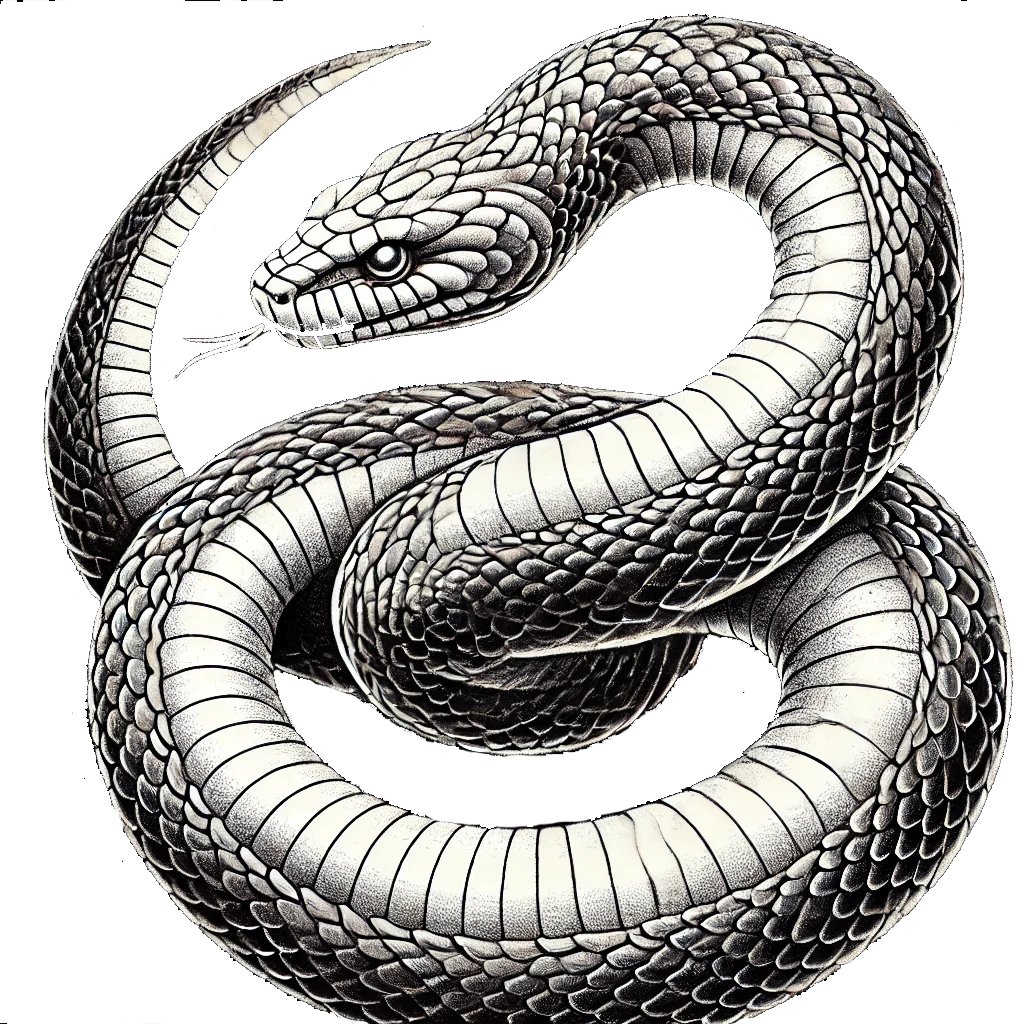
Ukhu Pacha - (OO-koo PAH-chah) - The Lower World
Energy Healing for Beginners: A Practical Introduction to Working with Your Energy
You have been in a room where the energy was so thick you could feel it before anyone spoke. You have left a conversation depleted in a way that had nothing to do with its content. You have been doing this your whole life. You just did not have a framework for it.
In This Article
Energy Healing for Beginners: You Have Already Been Doing This
You walk into a meeting room before anyone else arrives. Nothing has happened yet. No one has spoken. But something is already in the air - a heaviness, or a charge, or an ease you cannot account for. You adjust without deciding to. You pick a seat based on something you cannot name. Twenty minutes later, the conversation proves you right.
Energy healing for beginners is not an introduction to something foreign. It is a framework for something you are already doing without the vocabulary to describe it. You have read rooms. You have felt the weight of someone else's mood before they said a word. You have met a stranger and known, with no evidence, whether to trust them.
You are not learning a new skill. You are finally naming one you have been using without permission to take it seriously.
That knowing - physical, immediate, often dismissed - is energy perception. The question is not whether you have it. The question is whether you have learned to work with it deliberately, or whether it is still working on you.
What Energy Perception Actually Is
Think of energy perception the way you think of musical pitch recognition. Some people are born with absolute pitch. Most are not. But almost everyone, with enough exposure and attention, can learn to hear when something is off-key. The capacity is not reserved for the gifted. It is distributed unevenly and developed unevenly. Training closes that gap.
The energetic body - the field that surrounds and interpenetrates the physical body, sometimes called the aura, sometimes called the biofield - is not invisible to most people because it is hidden. It is invisible because no one taught them where to look, or more precisely, how to pay attention.
Energy moves through the body in patterns that different traditions have named differently. Prana in yogic systems. Chi in Chinese tradition. What they are describing is the same functional reality - that the physical body is embedded in and continuously exchanging information with a larger field. That field responds to thought, emotion, environment, and other people. You feel those responses. You have been feeling them your whole life.
The energetic body is not something you access in special states. It is what you are standing in right now.
The INTI NAN Perspective
Western approaches to energy perception tend to treat it as a skill acquired by moving upward - toward higher states, elevated consciousness, spiritual attainment. The assumption is that you are starting from ordinary ground and must ascend to reach the energetic layer. The Serpent (ah-MAH-roo) The Serpent, guardian of Ukhu Pacha (OO-koo PAH-chah) The Lower World, moves in the opposite direction.
The Serpent perceives through contact with the ground, not through distance from it. Ukhu Pacha - the Lower World in Q'ero cosmology - is not a destination you reach through special practice. It is the layer that is already running beneath ordinary awareness, continuously, whether you attend to it or not. The Serpent does not rise above what it encounters. It moves through it, touching it fully, reading it through direct contact.
This reframes what energy healing for beginners actually requires. It is not about ascending to a state where you can perceive the energy field. It is about descending your attention - pressing it downward into the body, into sensation, into the ground-level intelligence that has been registering information all along. The energy field is not above you. It is beneath the noise of ordinary thinking, where the Serpent already lives.
What Western psychology misses here is that the body is not a receiver of energetic data - it is the first reader. Before the mind forms an interpretation, the body has already registered the field. Ukhu Pacha holds that body-level knowing as valid information, not superstition to be explained away.
The Serpent does not seek the signal from a distance. It reads the ground it is already touching.
Ukhu Pacha is one of three dimensions in the INTI NAN system. Each dimension combines with a Soul Type and an Enneagram type to produce one of 189 named pathways™. Three examples from the same Enneagram and Soul Type pairing show how the healing dimension shifts the recognition: The Karmic Librarian works through karmic recognition, The Bone Reader works through shamanic knowing, and a third sibling pathway completes the set through a different energetic channel. Each is a distinct recognition, not a variation on the same one.
Want to know how your energetic body operates?
A short test. Your result names which energy patterns are most active in your system and where the natural openings and constrictions are - the energetic signature your body carries.
Take the Free Energy Healing Test →How Energy Healing for Beginners Actually Works: The Four Channels
Energy perception develops through four primary channels. Most beginners have one that is already active and reliable. The work is recognizing which one leads for you, building on it, and gradually developing the others.
Physical Sensation
You feel energy as body data. Pressure in the chest when something is wrong. Warmth or tingling in the hands near certain people. Heaviness in the shoulders after certain conversations. If this is your primary channel, you have probably spent years attributing these sensations to something physical - fatigue, tension, coincidence. They are not coincidence. They are your most reliable instrument.
Emotional Resonance
You absorb the emotional field of a room without choosing to. You walk into a space and feel what the room has been holding. You leave certain people feeling their feelings rather than your own. If this is your channel, the central skill is not shutting it down. It is learning to distinguish what is yours from what you have absorbed. That distinction is the entire game.
Visual Perception
You see color, light, or movement at the edges of your vision that you have learned to dismiss. Or you see nothing at all but notice you consistently imagine the energy field of a person or space as a color or shape before you have consciously processed it. Visual perception is often the last channel to trust, because it is easiest to dismiss as imagination. It is not imagination. Imagination is how vision arrives before the mind names it.
Direct Knowing
You simply know things you have no external basis for knowing. Not intuition as a vague feeling - a specific knowing that turns out to be accurate. If this is your channel, you have probably spent years explaining it away or keeping it private to avoid sounding strange. The energy field delivers information directly to cognition, bypassing sensation and emotion entirely. That is not mystical. That is a different routing.
The boundary between perception and absorption is the central skill in energy work - you cannot develop one without learning to manage the other.
Understanding which channel leads for you matters because most beginner instruction assumes visual perception is universal. It is not. If your primary channel is physical sensation and you are trying to see auras, you are training the wrong instrument. Start where your perception is already alive.
The shift from passive perception to active work happens when you learn to distinguish between perceiving the energy field and absorbing it. Perceiving means you register what is present without it becoming yours. Absorbing means you have taken it on - the other person's exhaustion is now sitting in your chest. Both happen through the same channels. The difference is whether you have a container around your own field while you are reading someone else's.
The Five Practices in Sequence
These five practices build on each other. Starting in the middle is why most beginners plateau early.
What follows describes how the tradition understands each phase. It is offered for reflection and recognition, not as instruction, recommendation, or a substitute for professional care.
Grounding - Before any other energy work, establish contact between your field and the earth. Not as metaphor. As a physical act of attention. Feet on the floor, breath moved downward, awareness pressed into the body rather than held in the head. Grounding is the prerequisite. Grounding practices are covered in detail as a foundation for everything that follows.
Centering - Once grounded, locate yourself inside your own field. There is a specific quality of arriving in your own body that is different from simply being in it. Centering is the practice of returning to that location deliberately, especially after you have drifted into someone else's field.
Clearing - Move what has accumulated that is not yours. This does not require ceremony. It requires the recognition that certain sensations, emotions, or thoughts arrived from outside and a deliberate release of them back to the field.
Shielding - Establish a permeable boundary around your energy field before entering dense environments. The word shielding makes it sound like armor. It is closer to choosing how porous you are. You can still perceive what is around you. You stop absorbing it automatically.
Filling - After clearing and shielding, actively resource your own field. What replenishes your aura is individual. For some it is time in nature. For some it is solitude. For some it is specific people. Knowing what fills you is as important as knowing what drains you.
Grounding is not the first step because it is the simplest. It is the first step because nothing else works without it.
What Beginners Almost Universally Get Wrong
Common Belief
Energy perception is a gift some people have and others do not. If you have not experienced clear, undeniable energetic phenomena, you probably are not sensitive to energy.
What Is Actually True
Energy perception is a learnable skill distributed unevenly, not a binary gift. Most beginners are already perceiving accurately and dismissing the data before it reaches conscious attention. The problem is not the signal. It is the self-doubt that intercepts the signal and reclassifies it as coincidence, projection, or imagination before it can be used.
Self-doubt is the most common block in early energy work - and the most underestimated one. A beginner who perceives something real and then immediately questions whether they perceived it cannot build on that perception. The perception evaporates under examination. The solution is not to stop questioning. It is to question after you have recorded what arrived, not before.
The second most common mistake is trying to perceive the energy field as a visual phenomenon when your primary channel is something else entirely. You can spend years trying to see auras and miss the fact that you have been reading chi through physical sensation with high accuracy the whole time. Match your practice to your channel, not to the most commonly depicted version of energy perception.
The third mistake is working with your energy field only when something has gone wrong. The chakra system and the broader energetic body are not emergency systems. They are continuous. Attention to your energy field works best as a daily practice, not a crisis response.
Where to Go from Here
Energy perception develops through layered attention over time. These resources support that development at different levels of depth.
Find Your Starting Point
The Free Energy Healing Test identifies how you process energy, who and what charges or drains you, and where body intelligence leads your decisions. It is the most direct way to understand which channel is already active for you.
Go Deeper
The Energy Healing Guide covers the behavioral patterns of energy healing - how the body registers what the mind has not yet named. It extends what this article introduces into a fuller map of how energy moves in daily life.
The Full Architecture
The parent article on the energetic body covers the full energetic body architecture - what the field is, how it is structured, and what disrupts it. This article is one entry point into that larger framework.
The Lower World
The Ukhu Pacha world page presents the full Ukhu Pacha framework - the complete range of approaches the Serpent holds, from grounding and chakra work to shamanic and karmic recognition.
IF YOU WANT THE FULL PICTURE
Recognize Your Complete Pathway
Your Enneagram explains why you do what you do. The Karpay names all three - and life stops feeling like a fight you don't know how to win.
First 5 chapters free · Complete 11-chapter pathway for $49
Takes about 60 minutes.
Continue Exploring Free
The Enneagram framework in its modern psychological form was developed by Oscar Ichazo and Claudio Naranjo in the 1960s and 1970s and has been extensively documented by the Enneagram Institute. The INTI NAN system adapts the Enneagram as one of three dimensions that together map a person's full pathway.
The Soul Type framework is adapted from the Michael Teachings tradition, originally channeled by Chelsea Quinn Yarbro and developed across several decades of study. Within INTI NAN it represents the essence dimension of the pathway - what the person brought in rather than what they learned.
The three-world cosmological structure (Hanan Pacha, Kay Pacha, Ukhu Pacha) and the three healing pathways - Energy Healing (Kawsay Hampiy), Karmic Healing (Nawpa Hampiy), and Shamanic Healing (Paqo Hampiy) - are drawn from Andean Q'ero tradition, the indigenous Andean people widely regarded as the keepers of the original Inca spiritual tradition.
The framework is documented across anthropological and linguistic scholarship as a pre-Hispanic cosmological system rooted in the Quechua language. See also the Pacha (Inca mythology) article, which draws on colonial Quechua sources including the chronicles of Jesuit historian Jose de Acosta, and Constance Classen, Inca Cosmology and the Human Body (University of Utah Press, 1993).
Disclaimer: The INTI NAN pathway system is a framework for self-discovery and personal growth, not medical, therapeutic, or psychological advice, and not a religious teaching. Pathway descriptions and the Quechua and Andean concepts used throughout the platform are intended to support reflection and should be interpreted as invitations to explore, not definitive diagnoses, prescriptions, or representations of the full depth of living Andean tradition.