Ukhu Pacha - (OO-koo PAH-chah) - The Lower World
Shamanic Healing: Ancient Wisdom for Modern Transformation
She had done years of inner work. She understood her patterns with impressive precision. But the understanding had not translated into the change she was looking for. She knew her story. She did not feel healed.
In This Article
When Does Shamanic Healing Address What Understanding Cannot?
Shamanic healing was built for the gap between understanding a pattern and actual change. In the INTI NAN Ukhu Pacha framework, many people arrive at shamanism not because they believe in spirit worlds but because everything else has been thorough and something is still not moving.
You have done the work. You have named the patterns, traced them back, understood where they came from. You can explain yourself to anyone who asks. And yet something in your body still braces in the same old way. The same situation still pulls the same response. The map is complete. The territory has not changed.
This is the gap that shamanic healing was built for. Not the gap in your understanding, but the gap between understanding and actual change. Many people arrive at shamanism not because they believe in spirit worlds, but because everything else has been thorough and something is still not moving.
You can understand a pattern completely and still live inside it. Shamanic healing works at the level where the pattern is held, not the level where it is explained.
That gap is not a failure of intelligence or commitment. It is a signal that the work is being done at one level and the problem lives at another. Shamanism has always known this. The practitioner does not analyze the pattern from above. The practitioner descends to where it lives.
What Does Shamanic Healing Actually Address?
Most approaches to personal change work with what is accessible to consciousness. In the INTI NAN Ukhu Pacha framework, shamanism operates on a different premise - that a person has a soul dimension which can become fragmented, depleted, or burdened in ways that cognitive work does not reach, because cognitive work does not reach that level.
The Andean cosmology at the root of INTI NAN comes from the Q'ero people of the Peruvian Andes, whose unbroken spiritual tradition preserves the three-world framework, the ceremonial work with mountain spirits, and the relationship to Pachamama (pah-cha-MAH-ma) Earth Mother that shamanic practices in this lineage carry forward.
Shamanic healing is not a belief system but a set of practices developed across indigenous cultures over thousands of years. In the INTI NAN system, this practice operates in Ukhu Pacha and forms the Healing Pathway coordinate, one of three dimensions producing a named pathway.
Shamanism operates on a different premise. The premise is that a person is not only a psychological and biological organism. There is a soul dimension, and that dimension can become fragmented, depleted, or burdened in ways that no amount of cognitive work will resolve - because cognitive work does not reach that level.
Shamanism does not compete with psychology. It addresses the dimension psychology is not designed to reach.
Across indigenous cultures on every continent, shamanic practitioners have worked with the same basic understanding: illness and stuckness have causes that exist beyond the visible. The shamanic journey - the practitioner entering an altered state to move between worlds - is how those causes are accessed and addressed. Soul retrieval recovers lost vitality. Power animal retrieval reconnects a person to their innate strength. Extraction removes what does not belong. Ancestral healing addresses the patterns that arrived before you did.
You do not have to accept any metaphysical framework to notice that these practices produce results where other approaches have not. The results are the data.
How Does the INTI NAN Ukhu Pacha Framework Approach Shamanic Healing?
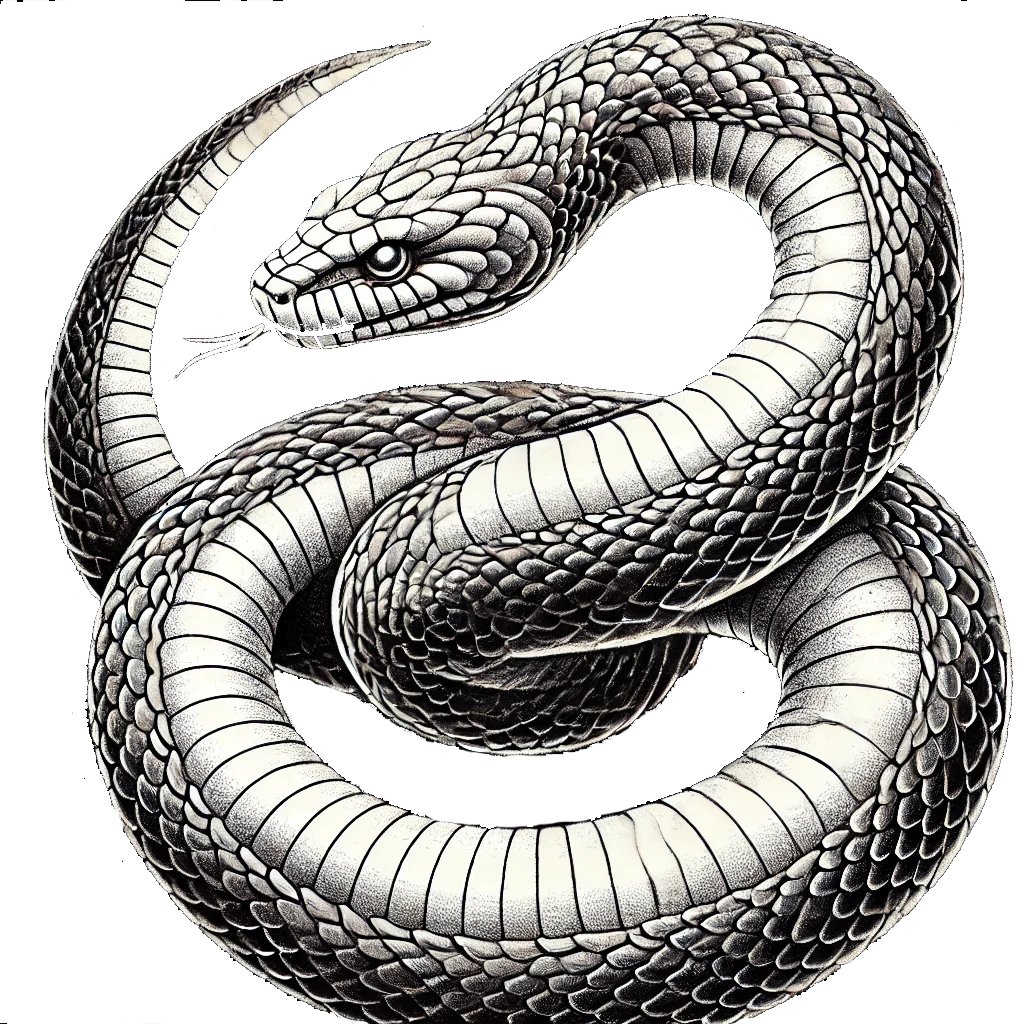
In the INTI NAN Ukhu Pacha framework, the Serpent (ah-MAH-roo) The Serpent teaches by living what it knows. It moves between worlds without fear, stays close to the ground, and sheds its skin completely when the time comes - not gradually, not partially. That is the movement shamanic healing points toward: a complete shedding at the root.
That is the movement shamanic healing points toward. Not gradual improvement at the surface. A complete shedding at the root. Western psychological frameworks work from above - they observe the pattern, name it, build understanding. The Serpent does not explain the old skin. It simply leaves it behind, because it has grown something new underneath.
What the Andean lens reveals that Western frameworks tend to miss is this: some of what you carry is not yours. It arrived through lineage, through the land you grew up on, through ancestral cycles that predate your birth. Ancestral healing is not metaphor here. It is the recognition that a person is a node in a much longer thread, and that thread can be worked with directly.
The Serpent witnesses without judging the weight of what it carries. And then it sheds.
The Serpent does not explain the old skin. It grows something new underneath and leaves the old one behind completely.
Ukhu Pacha is one of three dimensions in INTI NAN. Combined with the Enneagram world of Kay Pacha (KAY PAH-chah) The Middle World and the Soul Type world of Hanan Pacha (hah-NAHN PAH-chah) The Upper World, it produces one of 189 named pathways™. Each pathway names a specific recognition - a combination particular to how Enneagram pattern, Soul Type essence, and healing dimension resolve in one person. Shamanic healing is one of three orientations within this Lower World. The Serpent's particular gift is the willingness to descend completely - to enter the territory where the pattern is held rather than the territory where it is named. That is the door shamanic healing opens. The map is not complete until all three dimensions are visible. The Karpay is how you find which pathway is yours.
Not sure which shamanic practice is yours?
A short assessment. Your result names which shamanic practice - soul retrieval, power animal work, extraction, ancestral, or another - corresponds to what your particular pattern most calls for.
Take the Free Shamanic Healing Test →What Are the Five Core Shamanic Healing Practices?
Shamanism is not a single technique. In the INTI NAN Ukhu Pacha framework, five widely used practices address different dimensions of what is not working - the shamanic journey, soul retrieval, power animal retrieval, extraction, and ancestral healing. Each practice works at a distinct level.
The Shamanic Journey
The practitioner enters an altered state - typically through rhythmic drumming - and moves into non-ordinary reality to retrieve information, make contact with guiding forces, or work on behalf of a client. You may experience this yourself as a deeply relaxed state in which images, impressions, or a strong sense of knowing arise. It is less like a dream and more like a waking perception that arrives from somewhere you did not construct.
Soul Retrieval
Shamanic traditions across cultures share the understanding that parts of the self can become separated during experiences of shock, loss, or sustained pressure. Soul retrieval is the practice of locating those parts and returning them. People who have undergone soul retrieval often describe feeling more present, more like themselves, or as though something they could not name had been returned. The practitioner journeys on your behalf and brings back what was lost.
Power Animal Retrieval
In shamanic understanding, each person has protective spiritual allies who take animal form. When a person is depleted, disconnected, or moving through an extended period of difficulty, they may have lost contact with that alliance. Power animal retrieval restores the connection. The result is often experienced as a renewed sense of direction, resilience, or instinct - a feeling that something has come back online that was not accessible before.
Extraction
Not everything we carry belongs to us. Extraction is the shamanic practice of identifying and removing energies, thought-forms, or influences that have taken up residence and are not native to the person. This can manifest as persistent intrusive thoughts, inexplicable heaviness, or a recurring feeling of being not quite yourself. Extraction addresses what does not belong at the level where it actually resides, rather than managing its symptoms from above.
Ancestral Healing
Some of what you are working with arrived before you. Ancestral healing engages directly with the lineage - the patterns, burdens, and unresolved material passed down through family lines. This is not about blaming the past. It is about recognizing that certain cycles will keep presenting until they are addressed at their actual origin point. Working with plant medicine and other sacred practices often opens the door to ancestral material that ordinary awareness cannot access.
Some cycles will keep presenting until they are addressed at their actual origin point - not managed from above, but met at the root.
These five practices are not interchangeable. A skilled practitioner assesses which one the situation is calling for, and why. The same presenting pattern can have different root causes, which is why two people with seemingly identical difficulties can require entirely different approaches.
How Do You Begin Shamanic Work Without Committing to a Tradition?
You do not need to adopt a belief system to begin shamanic work. In the INTI NAN Ukhu Pacha framework, the useful starting point is behavioral - notice where the same result keeps appearing despite genuine effort and clear understanding. That repetition is the signal pointing to where the pattern is actually held.
Map the pattern. Where does the same thing keep happening? What have you already tried? What level was each attempt working at?
Research practitioners carefully. Look for lineage, training, and community standing. Shamanism has legitimate teachers and it has people who have taken a weekend course. The difference matters. Ask directly about their training and who trained them.
Start with a single encounter rather than a commitment. A qualified practitioner will not pressure you toward a program. A single encounter of soul retrieval or power animal work can be evaluated on its own terms.
Notice what changes in the days and weeks after. Not what you believe about what happened, but what actually shifts in behavior, perception, or physical experience.
You do not have to believe in shamanism for it to work. You have to be honest about what has not worked yet, and curious about what else might be true.
What Do People Get Wrong About Shamanism?
The most common misreading is that shamanism is a belief system. In the INTI NAN Ukhu Pacha framework, it is a technology - a set of practices developed over thousands of years for addressing specific kinds of difficulty. You need not believe in spirit worlds to benefit from practices with documented results across cultures.
Common Belief
Shamanism requires accepting a specific cosmology or spiritual worldview before it can be useful to you.
What Is Actually True
Shamanic practices have produced documented results across cultures and centuries without requiring uniform belief. The practices are the point. Your belief about why they work is secondary to whether they produce change.
Common Belief
If you have done years of psychological work, shamanism has nothing to add - it is for people who have not already done the inner work.
What Is Actually True
Years of psychological insight can coexist with patterns that have not moved. These are not competing frameworks. They address different levels of the same system. The person who has done the most psychological work is often the person best positioned to recognize what shamanic practice addresses that psychology cannot reach.
Cultural discernment matters here. Shamanism belongs to specific lineages and traditions. Seek practitioners who are trained within a tradition and transparent about that training, not those who have assembled practices from multiple cultures without accountability to any of them.
Where Do You Go From Here With Shamanic Work?
If any of this has described something you recognize, the next step is specificity. These INTI NAN resources help you identify how your particular Ukhu Pacha pattern presents, and which shamanic approach is most likely to reach it - starting from where the signal is loudest rather than the full tradition at once.
Take the Test
The Free Shamanic Healing Test identifies how environment, ritual, and place-based practice shape your inner state. It gives you a specific starting point rather than a general orientation.
Go Deeper
The Shamanic Healing Guide covers shamanic healing as a behavioral practice - how changing your environment, rhythm, and ritual changes your state. It moves from concept to concrete practice.
Explore the Full World
The Ukhu Pacha world page presents the full Ukhu Pacha framework - the complete map of what this dimension covers and how it connects to the other two worlds in INTI NAN.
Weekly · Free
One pathway. Every week.
A character you may recognize - perhaps even yourself - in a situation from ordinary life making a choice. The pattern that explains why - across all three dimensions. You'll see your friend. Or your father. Or the version of yourself you don't always notice.
No spam. Unsubscribe any time.
IF YOU WANT THE FULL PICTURE
Recognize Your Complete Pathway
Your Healing Path shows you how you change. The Karpay maps all three - and life stops feeling like a fight you don't know how to win.
First 5 chapters free · Complete 11-chapter pathway for $49
Takes about 60 minutes.
The Enneagram framework in its modern psychological form was developed by Oscar Ichazo and Claudio Naranjo in the 1960s and 1970s and has been extensively documented by the Enneagram Institute. The INTI NAN system adapts the Enneagram as one of three dimensions that together map a person's full pathway.
The Soul Type framework is adapted from the Michael Teachings tradition, originally channeled by Chelsea Quinn Yarbro and developed across several decades of study. Within INTI NAN it represents the essence dimension of the pathway - what the person brought in rather than what they learned.
The three-world cosmological structure (Hanan Pacha, Kay Pacha, Ukhu Pacha) and the three healing pathways - Energy Healing (Kawsay Hampiy), Karmic Healing (Nawpa Hampiy), and Shamanic Healing (Paqo Hampiy) - are drawn from Andean Q'ero tradition, the indigenous Andean people widely regarded as the keepers of the original Inca spiritual tradition.
The framework is documented across anthropological and linguistic scholarship as a pre-Hispanic cosmological system rooted in the Quechua language. For further reading see the Pacha (Inca mythology) article, which draws on colonial Quechua sources including the chronicles of Jesuit historian Jose de Acosta, and Constance Classen, Inca Cosmology and the Human Body (University of Utah Press, 1993).