Ukhu Pacha – (OO-koo PAH-chah) – The Lower World
Past Life Patterns: Recognizing What You Carried Forward Into This Life
You carry patterns whose source you cannot account for. A fear that has no biographical origin. A skill that arrived without learning. A specific cultural or geographic pull without family heritage to explain it. A recurring theme that shows up across unrelated areas of your life with a consistency too precise to be random. The framework has a name for patterns that predate the language that could explain them.
When Does Past Life Pattern Recognition Actually Happen?
It happens in moments where the pattern is structurally impossible to account for biographically. You travel somewhere you have never been and the streets feel less like discovery and more like return. You hear a piece of music or smell a particular incense and something opens in you that has no biographical explanation. A child in your life has fears or affinities that no event in their seven years could explain. You notice the same configuration repeating across unrelated areas of your life, with a precision that does not match anything in your this-lifetime history.
The recognition usually arrives the same way: faster than analysis, with somatic confirmation, and with specificity that biographical memory cannot account for. It is not the vague familiarity of a passing thought. It is precise. The place, the affinity, the recurring theme carries information that your biography cannot source. You may have spent years dismissing this as imagination, until the patterns kept repeating in ways that made dismissal harder than acceptance.
The framework does not require you to commit to reincarnation as a literal claim. It names the phenomenon you are already experiencing – patterns of recognition that arrive without biographical source – and gives you a way to work with them.
How Does the INTI NAN Ukhu Pacha Framework Approach Past Life Patterns?
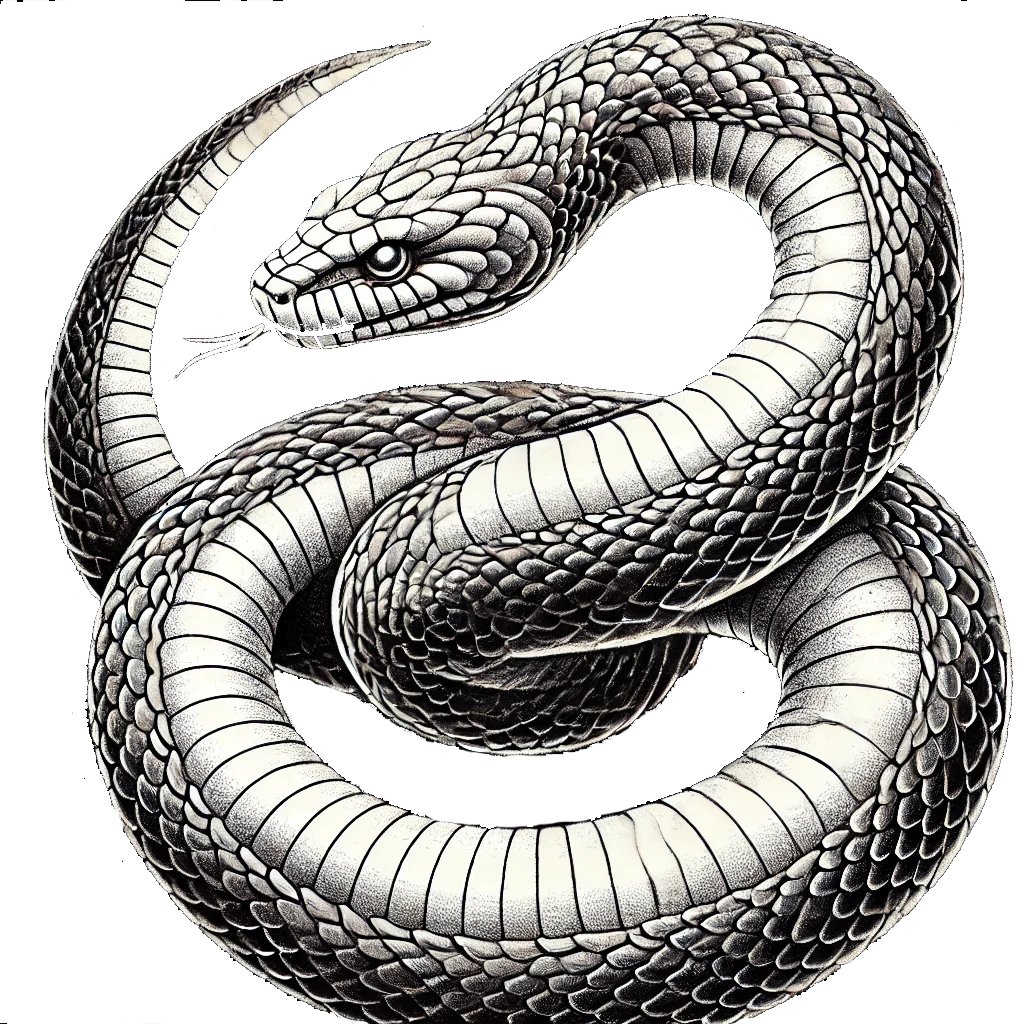
In the INTI NAN Ukhu Pacha framework, the Serpent (ah-MAH-roo) The Serpent is the guardian of patterns that predate conscious memory. The Serpent’s domain includes inheritance lines that the Western model has no good language for: patterns laid down before this lifetime’s verbal capacity, patterns that arrive through what the Andean tradition calls the unbroken thread.
The Western framing treats past lives as either literal metaphysical claim (reincarnation as a settled fact) or as fantasy (reincarnation as wishful identity). The framework refuses both. Past life recognition is a behavioral phenomenon. People register patterns – in relationships, in locations, in skills, in fears – that have no source in their biographical memory. That registration is observable. What you choose to believe about the metaphysical source is a separate question from whether the registration is real.
In the Ukhu Pacha framework, past life is the name for any pattern whose origin predates this lifetime’s verbal memory. The pattern may have come from a previous incarnation. The pattern may have come from ancestral inheritance, from the prenatal field, from epigenetic carry, from sources the framework does not pretend to fully map. What matters is that the pattern is present and operates without conscious origin. The work begins from there.
Past life is the framework’s name for patterns that predate verbal memory – regardless of whether the patterns came from a previous incarnation or from somewhere else entirely.
Ukhu Pacha is one of three dimensions in INTI NAN. Combined with the Enneagram world of Kay Pacha (KAY PAH-chah) The Middle World and the Soul Type world of Hanan Pacha (hah-NAHN PAH-chah) The Upper World, it produces one of 189 named pathways™. Each pathway names a specific recognition – a combination particular to how all three dimensions resolve in one person. Past life pattern work sits within the karmic dimension of this Lower World. The Karpay is how you find which pathway is yours.
Want to recognize the pattern as it surfaces?
The Karmic Healing Test names how pre-verbal pattern repetition operates in your specific configuration – whether past life material, ancestral inheritance, or another karmic signature is the one most active in your daily life right now.
Take the Free Karmic Healing Test →How Does Past Life Pattern Recognition Differ From Intuition, Transference, Projection, and Deja Vu?
A note on scope. This article covers past life recognition as pattern inheritance – what you carry across lifetimes that shows up without a specific other person being present. For past life recognition as relational signaling – the experience of meeting a specific soul you already know – see Recognizing When You’ve Met Before: Signs of Past Life Connection in the Soul section. The two articles are complementary: this one is about what you carried in; that one is about who you came back to.
Five terms get used interchangeably and they describe different phenomena. The Ukhu Pacha framework separates them carefully because each requires a different response.
Past Life Recognition
Registration of a pattern – in a person, place, skill, or affinity – whose source has no biographical origin in this lifetime. The mechanism is the appearance of accurate or specifically congruent information that cannot be accounted for by ordinary perception or accumulated experience. Behavioral signature: knowing without learning, familiarity without history, somatic confirmation alongside the cognitive recognition.
Intuition
Rapid implicit pattern recognition drawing on accumulated experience that conscious thought has not yet caught up to. Intuitives know things without being able to articulate how they know – usually because subtle cues have been integrated over years of exposure. Intuition is developable and improves with experience. Past life recognition does not improve with practice in the same way; it either arrives or it does not.
Transference
Projecting earlier (this-lifetime) relationship dynamics onto current people. Someone reminds you of a parent, an old partner, a difficult teacher, and you respond to them as if they were that person. Transference is real and ubiquitous. It is also often mistaken for past life recognition. The distinguishing test: when you trace transference back, you can usually identify the original this-lifetime figure. Past life recognition does not yield to that tracing.
Projection
Attributing one’s own internal state to someone else. You are angry, and you decide the other person is angry. You feel rejected, and you decide they are rejecting you. Projection masquerades as recognition but is actually self-disclosure. The test: can the supposed recognition be accounted for by your own current state? If yes, treat it as projection until proven otherwise.
Deja Vu
A momentary scene-based sense of having lived this exact moment before, typically lasting seconds. The neuroscience literature treats deja vu as a brief desynchronization between perception and memory. It is real, it is usually brief, and it usually does not carry specific information. Past life recognition is durational and information-bearing.
All five can occur in the same person, sometimes in the same week, sometimes about the same situation. Sorting which is which is the first move in working with any of them.
What Are the Five Signs of Past Life Pattern Inheritance?
The Ukhu Pacha framework recognizes five signatures that point to past life pattern specifically – not transference, not intuition, not projection, not deja vu. Each is observable in daily life. If three or more are consistently present around a particular person, place, or theme, the framework treats the past life lens as a working hypothesis worth holding.
Recurring Themes Across Unrelated Areas of Your Life
The same pattern shows up across domains that have no biographical reason to share it. The shape of conflict in your relationships matches the shape of conflict in your career, which matches the shape of difficulty you had as a child, in a configuration too specific to be coincidence. The pattern travels with you regardless of who you are with or what you are doing. It is the same signature reappearing in unrelated contexts, which suggests its source predates the contexts themselves.
Skills or Knowledge That Arrived Without Learning
You can do something well that you never learned. A musical instrument feels intuitive on first contact. A craft, a language, a movement form arrives faster than your educational history accounts for. The classical research on this (Stevenson’s University of Virginia cases) documented young children speaking languages they had no exposure to, identifying tools and techniques from periods before their birth, and demonstrating skills their families could not explain.
Inexplicable Fears or Affinities With Specific Places, Eras, or Objects
You have a fear of a specific configuration of circumstances – a particular kind of room, a particular sound, a particular historical period – that has no source in your biographical history. Or you have an affinity that is equally specific and equally unexplained. The fears and affinities tend to be precise rather than diffuse, which distinguishes them from general anxiety or generic curiosity.
Recurring Dreams With Settings That Predate Your Experience
You dream the same place repeatedly. The dreams have continuity – settings, characters, plotlines that develop across multiple dreams. The setting is not somewhere you have been in this lifetime. The detail is specific in a way that imagination usually does not produce. When the dreams are mapped against historical or geographic detail, they sometimes hold up to verification.
Body-Level Reactions Without Biographical Source
Certain sensory inputs produce strong somatic reactions that you cannot account for biographically. A particular language being spoken produces tears. A particular incense or food produces a deep settling. A geographic location produces a physical change in your breathing or pulse the moment you arrive. The reaction is too specific to be random and too consistent to be cultural exposure.
The five signs are not personality. They are the behavioral signature of a pattern arriving from somewhere that biographical memory cannot reach.
How Do You Work With Past Life Recognition Without Metaphysical Commitment?
The temptation when past life recognition arrives is to either commit fully to a literal reincarnation story or to dismiss the recognition entirely. The framework refuses both moves. The work is done at the level of pattern, held as working hypothesis, with the metaphysical question deliberately bracketed.
Five Practices for Working With Past Life Patterns
Holding the recognition as working hypothesis, not literal claim. When a past life pattern surfaces, treat it as data: this is what is showing up. Do not collapse the data into a definite story (“I was a healer in ancient Egypt”) and do not dismiss it as fantasy. Hold it as something present and observable, with its metaphysical source bracketed. The work proceeds from there regardless of where the bracket eventually closes.
Tracking the pattern, not the narrative content. What matters is the pattern – the specific configuration of recognition, affinity, fear, skill, or aversion that keeps appearing. The narrative content (the imagined story of when and where) is secondary. Two people with the same surfacing pattern may construct different narratives about it; the pattern is what the framework engages.
Distinguishing the pattern from the story you tell about it. Past life work goes wrong when the imagined narrative becomes more interesting than the present-life work. The temptation toward identity tourism – “I was Cleopatra” – is a way of avoiding the actual material the pattern is presenting. Hold the narrative loosely. Hold the pattern firmly.
Letting integration take its own form. Integration usually does not arrive as dramatic recognition. It arrives quietly: the pattern that used to drive a behavior loosens. The aversion releases. The somatic charge fades. The recognition that used to land hard now lands with less intensity. Integration looks like the pattern becoming optional rather than automatic, which is the same shape integration takes for any deep pattern work.
Knowing when professional support is needed. Some past life recognitions arrive with material that requires more than self-work to integrate – particularly when the pattern includes intense somatic activation, dissociation, or content that cannot be held alone. The Karmic Healing Guide names the threshold. Working with a practitioner who understands pre-verbal pattern work is sometimes the right next step.
The pattern predates the language that could name it. The work is to let the pattern become visible without forcing it into the wrong frame.
What Do People Get Wrong About Past Lives?
The cultural conversation around past lives has produced a set of refused framings that get in the way of the actual work. The Ukhu Pacha framework names them explicitly.
Common Belief
Past life work requires accepting reincarnation as a literal metaphysical fact.
What Is Actually True
The framework treats past life as a working name for patterns that predate verbal memory. Whether the patterns came from a previous incarnation, from ancestral inheritance, or from some other source is bracketed. The work is done at the level of pattern. You can work with the recognition without committing to a particular metaphysical story.
Common Belief
Knowing a past life explains your present life and resolves it.
What Is Actually True
Recognition is data, not resolution. Identifying a past life pattern does not by itself release the pattern. The work after recognition – tracking the pattern behaviorally, letting integration take its own form, distinguishing it from this-lifetime material – is the actual practice. Recognition without integration produces interesting stories and unchanged behavior.
Common Belief
Past life identity is more interesting than present-life pattern work.
What Is Actually True
The interest in dramatic past life identity (royalty, famous historical figures, exotic situations) is a tell. Identity tourism is one of the cleanest ways to avoid the present-life work the pattern is actually surfacing for. The mundane is usually closer to true than the dramatic. The pattern matters more than the story.
Common Belief
If a past life pattern is real, it is fixed and cannot be released.
What Is Actually True
Patterns predate memory but are not all immutable inheritances. Many past life patterns release through the same mechanism other deep patterns release: by becoming visible, by being held without forcing, and by being given room to complete what they were left mid-action. Some patterns turn out to be inheritances that the present life has already largely resolved. Others release with conscious work. A few hold longer and may need professional support.
Where Do You Go From Here With Past Life Pattern Recognition?
If past life pattern inheritance is something you have been registering without language for, these INTI NAN resources are the clearest next steps within the Ukhu Pacha framework.
Start Here
The Free Karmic Healing Test identifies your specific Ukhu Pacha karmic expression, including whether pattern repetition from pre-verbal sources is the primary mechanism in your current work.
Go Deeper
The Karmic Healing Guide covers the foundational practices for working with patterns whose source predates conscious memory, including past life work, ancestral pattern work, and pattern release.
The Cluster Anchor
The Past Life Patterns article establishes how karmic patterns operate and what recognition asks of you. Past life work sits within this larger picture of pre-verbal pattern recognition.
Foundational Practice
The Grounding Practices article covers the practice most people need before working with pre-verbal material. Strong grounding makes pattern surfacing safer and less destabilizing.
Weekly · Free
One pathway. Every week.
A character you may recognize – perhaps even yourself – in a situation from ordinary life making a choice. The pattern that explains why – across all three dimensions. You’ll see your friend. Or your father. Or the version of yourself you don’t always notice.
No spam. Unsubscribe any time.
IF YOU WANT THE FULL PICTURE
Recognize Your Complete Pathway
Your Healing Path shows you how you change. The Karpay maps all three – and life stops feeling like a fight you don’t know how to win.
First 5 chapters free · Complete 11-chapter pathway for $49
Takes about 60 minutes.
Additional Resources for Past Life Recognition
For rigorous academic research on past-life recognition, the foundational reference is Ian Stevenson, Twenty Cases Suggestive of Reincarnation (University of Virginia Press, 1966), and the more comprehensive Reincarnation and Biology (Praeger, 1997). Stevenson spent four decades at the University of Virginia documenting cases of young children reporting specific verifiable details from prior lives.
Jim Tucker, who succeeded Stevenson at UVA, continued this case-study work in Life Before Life: Children’s Memories of Previous Lives (St. Martin’s Press, 2005) and Return to Life: Extraordinary Cases of Children Who Remember Past Lives (St. Martin’s Press, 2013).
For the neuroscience of related anomalous cognition experiences including deja vu, see Brown et al. (2024), Consciousness and Cognition, 117. Indexed on PubMed.
The Enneagram framework in its modern psychological form was developed by Oscar Ichazo and Claudio Naranjo in the 1960s and 1970s and has been extensively documented by the Enneagram Institute. The INTI NAN system adapts the Enneagram as one of three dimensions that together map a person’s full pathway.
The Soul Type framework is adapted from the Michael Teachings tradition, originally channeled by Chelsea Quinn Yarbro and developed across several decades of study. Within INTI NAN it represents the essence dimension of the pathway – what the person brought in rather than what they learned.
The three-world cosmological structure (Hanan Pacha, Kay Pacha, Ukhu Pacha) and the three healing pathways – Energy Healing (Kawsay Hampiy), Karmic Healing (Nawpa Hampiy), and Shamanic Healing (Paqo Hampiy) – are drawn from Andean Q’ero tradition, the indigenous Andean people widely regarded as the keepers of the original Inca spiritual tradition.
The framework is documented across anthropological and linguistic scholarship as a pre-Hispanic cosmological system rooted in the Quechua language. For further reading see the Pacha (Inca mythology) article, which draws on colonial Quechua sources including the chronicles of Jesuit historian Jose de Acosta, and Constance Classen, Inca Cosmology and the Human Body (University of Utah Press, 1993).